
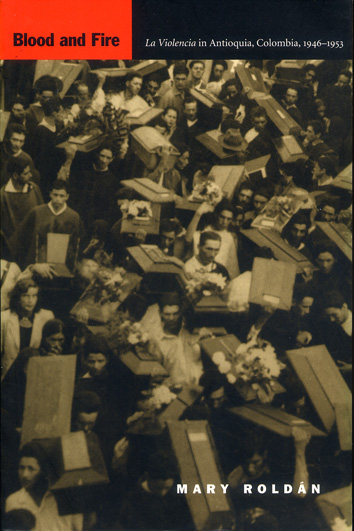
Blood and Fire: La Violencia in Antioquia, Colombia, 1946-1953 ∥ Roldán, Mary
-----------------------------------
ISBN13: 9780822329183
-----------------------------------
サイズ: 15.5 x 23.5 x 2.1 cm
-----------------------------------
頁 数: xiii+392 pgs.
-----------------------------------
装 丁: paper cover
-----------------------------------
出版社: Duke University Press
-----------------------------------
発行年: 2002
-----------------------------------
発行地: Durham
-----------------------------------
双書名: Latin America Otherwise
追加情報: ※ 詳細PDFリンク
本書は、著者メアリー・ロルダンによる、1946年から1958年にかけてコロンビアで起きた暴力の噴出、20万人もの死者を出しこの半球が経験した最悪の紛争の一つ「ラ・ビオレンシア」と呼ばれる恐怖の時代を対象とした研究書です。研究者たちは伝統的に、党派政治こそがこの内紛を駆り立てたと想定してきましたが、ロルダンはより繊細な視座からこの同胞殺しの背後にある政治的・文化的動機を検証することで、こうした従来の評価に異議を唱えています。著者は党派間の敵意が平和的な対話を暴力へと崩壊させるうえで重要な役割を果たしたことを認めつつも、従来の政治対立が他の懸念によって激化させられたと論じています。当時コロンビア国内で最も豊かで経済的に多様な地域であったアンティオキアにおける暴力の展開を分析することで、ロルダンは地方政治家と脆弱な中央国家との緊張関係、多様な形態の社会的偏見、そして経済発展の過程がいかに結びついて、暴力を政治行動の望ましい手段としていったかを明らかにしています。国家暴力の準軍事組織への私営化と武装抵抗運動の出現は、コロンビアの市民生活に恐ろしい代償を強いており、こうした過程は今なおこの国を悩ませ続けています。ロルダンの歴史的読み解きは、アンティオキアにおけるラ・ビオレンシアの経験が、文化的優越性を前提とした地域アイデンティティの形成が人種的・民族的な「他者」への暴力を正当化し、土地と天然資源の略奪の口実として用いられた、一種の内的植民地主義の到達点であったことを示唆しています。本書は、ラ・ビオレンシアがコロンビア人に特有の異常事態ではなく、近代世界における資本主義の発展と国家形成の論理的帰結であったことを論証する、民族性・地理・階級の交差点からコロンビアの暴力の起源を分析した初の研究です。
[対象年代、研究分野]
対象年代は1946年から1958年に至るコロンビア(アンティオキア県)であり、該当する研究分野はラテンアメリカ政治史、暴力研究(コロンビア内戦史)、地域史、社会史(内的植民地主義論)などです。これらの分野を専門とする読者を対象としています。
※ タイトルページ、目次、プロローグなどは「追加情報」のPDFをご参照下さい。
Description:
Between 1946 and 1958 a surge of violence in Colombia left 200,000 dead in one of the worst conflicts our hemisphere has ever experienced. This little-studied period of terror, known as La Violencia, is the subject of Blood and Fire. Scholars have traditionally assumed that partisan politics drove La Violencia , but Mary Roldán challenges earlier assessments by providing a nuanced account of the political and cultural motives behind the fratricide. Although the author acknowledges that partisan animosities played an important role in the disintegration of peaceful discourse into violence, she argues that conventional political conflicts were intensified by other concerns.
Through an analysis of the evolution of violence in Antioquia, which at the time was the wealthiest and most economically diverse region of Colombia, Roldán demonstrates how tensions between regional politicians and the weak central state, diverse forms of social prejudice, and processes of economic development combined to make violence a preferred mode of political action. Privatization of state violence into paramilitary units, and the emergence of armed resistance movements, exacted a horrible cost on Colombian civic life, and these processes continue to plague the country.
Roldan’s reading of the historical events suggests that Antioquia’s experience of La Violencia was the culmination of a brand of internal colonialism, in which regional identity formation based on assumptions of cultural superiority were used to justify violence against racial or ethnic ‘others’ and as a pretext to seize land and natural resources. Blood and Fire demonstrates that, far from being a peculiarity of the Colombians, La Violencia was a logical product of capitalist development and state formation in the modern world.
This is the first study to analyze intersections of ethnicity, geography, and class to explore the genesis of Colombian violence, and it has implications for the study of repression in many other nations.
CONTENTS:
Acknowledgments......xi
Introduction......1
1. Medellin and Core Municipalities......43
2. Bajo Cauca, Magdalena Medio, and the Northeast......109
3. Uraba and Western Antioquia......171
4. Urrao and the Southwest......229
Epilogue......281
Appendix A: Tables......299
Appendix B: Maps......311
Notes......315
Bibliography......365
Index......383
-
RAE(スペイン王立アカデミー)とASALE(スペイン語アカデミー協会)が共同編集した改定新版「アカデミア最新スペイン語文法」シリーズ(既刊3巻)。2025年10月に刊行された本書は、その第4巻(最終巻)です。 2011年版の 555頁から 新版は 700頁余と大幅に改訂増補 !!
※ スペイン語の音声を体系的に理解するための資料として、研究者、教育関係者、上級学習者に不可欠であり、大学図書館・研究室にも必須の一冊です。
※ 大幅な改訂と更新: 旧版以降に進んだ最新の研究成果、特に言語の「バリエーション」に関する知見を全面的に反映。技術の進歩を活用し、内容の理解を助けるための工夫が凝らされています。
※ 具体的な革新点: 知覚音声学への配慮、第1章の全面的な書き直し、イントネーションを扱う第10章の大幅な改訂、QRコードによる発音サンプルの導入、補足的な参考文献の追加など。- Nueva gramática de la lengua española: Fonética y fonologia ∥ R.A.E.
- ¥17,380
-
※ スペイン王立アカデミーとASALE(スペイン語アカデミー協会)が共同編纂した、スペイン語の語彙の歴史を包括的に記録する辞書。語源・形態・意味の変化を詳細に解説しています。
※ DHLE(スペイン語歴史辞典)プロジェクトは現代のデジタル技術と国際的な共同作業体制を駆使して進行中の画期的な取り組み。
※ 10巻本・合計2万ページ超となる今回の紙書籍版(印刷版)は本プロジェクトの記念碑的な出版物。図書館・研究室の重要資料として長期保存の価値が高い文献になります。今後の更新はデジタル版に移行する見込みで、今回の書籍版は将来入手困難になることが予想されます。
※ 全10巻のうち、第1~3巻は現在では入手困難な1960年~1996年版(a-apasanca、b-bajoca)の復刻版です。過去の貴重な学術的成果であり、一次史料としての価値が高いものです。
※ 第4~10巻は2005年以降に進められたデジタル版DHLEから代表的な項目を抜粋して構成。
収録内容はスペイン語語彙史研究の最新成果を反映し厳選されています。- Diccionario histórico de la lengua española. in 10 vols. ∥ R.A.E.
- ¥178,200
-
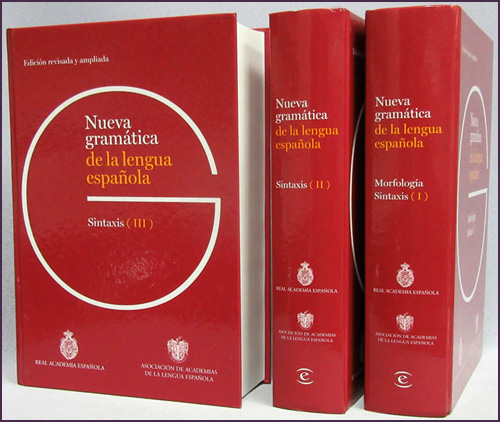
好評発売中!!
第2版 増補改訂版3巻本 「アカデミア最新スペイン語文法」。2009年に2巻本として出版されてから16年、さらに広く深く、スペイン語圏全体のスペイン語を総合的に扱うスペイン語文法書の決定版です!
本書はスペイン王立アカデミー(RAE)とASALE が共同で編纂した最新のスペイン語文法を、より精緻に再構成した改訂増補版であり、形態論から統語論に至るまで、スペイン語の構造を体系的かつ包括的に示す研究書です。従来版よりも内容説明が充実し、分析の明確化、現象の地理的・社会的分布に関する情報の拡充、さらに学習者・研究者双方に配慮した丁寧な解説が加えられています。全3巻・約5000頁に及ぶ大部の構成は、汎ヒスパニック的視点を重視し、スペイン語圏全体の多様性を踏まえた記述を特徴としています。記述文法と規範文法の両面を兼ね備え、学術研究・高度教育機関において必携の基礎資料となる一冊です。- Nueva gramática de la lengua española - Edicion revisada y ampliada in 3 vols. ∥ Real Academia Española
- ¥52,140